News
Each section below shows the two most recent articles in that category. To see more, click on a blue section title.
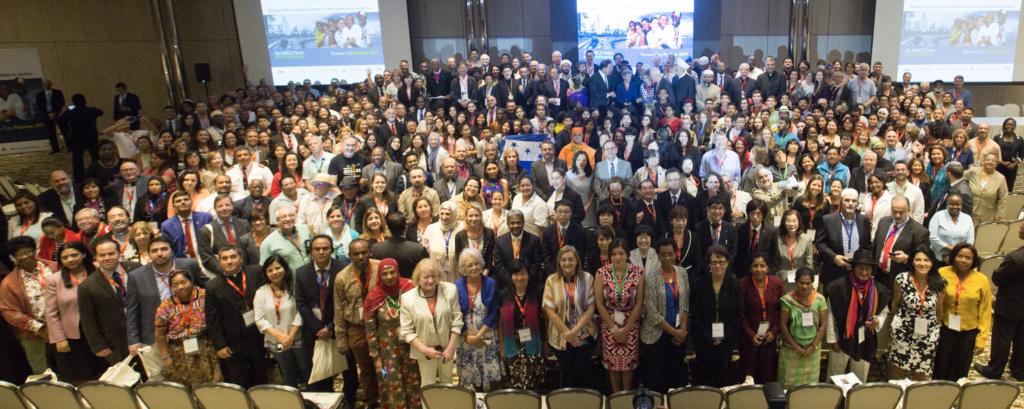
The comprehensive GNRC Fourth Forum Report is full of colorful photographic memories, detailed summaries, and transcripts from the Forum. It is available in PDF format here.
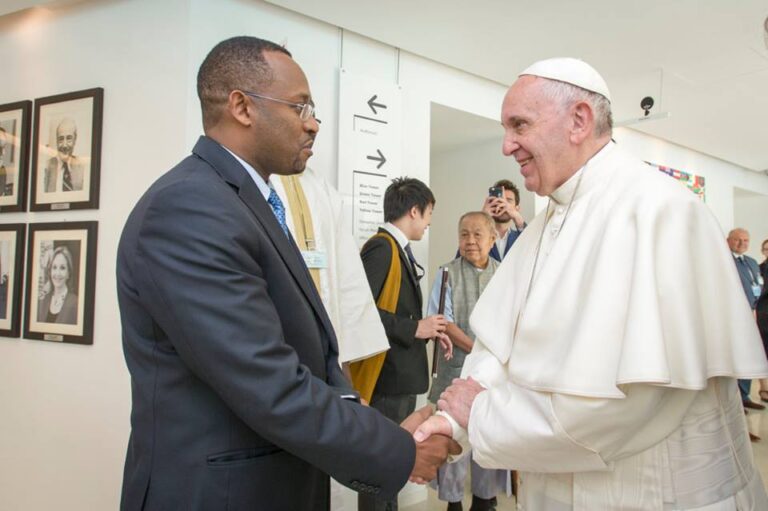
With the relocation of the global GNRC Secretariat to the new Arigatou International office in Nairobi, Kenya and the appointment of Dr. Mustafa Ali as the new GNRC Secretary General, GNRC members around the world can anticipate fuller support from Arigatou International for their volunteer interfaith activities for and with children.
With a new full-time Secretary General and stronger secretariat staffing, Arigatou International aims to encourage and promote action-oriented initiatives emerging from networking at various levels (local, national, sub-regional and regional) from a larger number of GNRC members. Any GNRC group or member willing to initiate action for children through interfaith cooperation is welcome to directly communicate with the new GNRC Secretary General and his staff at the GNRC Secretariat for advice and support. Such active GNRC members can submit requests for project-based financial support from Arigatou International to the GNRC Secretary General directly and receive technical advice on project management. Requests for support that maximize synergies among Arigatou’s global initiatives and involve many partners will be given priority. The Directors of Arigatou’s other global initiatives – Ethics Education for Children, the World Day of Prayer and Action for Children, and Mobilizing Faith-Based Resources to End Child Poverty – will also be available to GNRC members for technical advice and support in planning and organizing concrete actions under each initiative. Arigatou International expects this change to foster even more dynamic networking for interfaith cooperation for children and thanks the existing GNRC coordinators for their years of tireless volunteer service and their continued cooperation as the GNRC continues to grow and change. |
|
With 150 attending at the Chamber of Deputies in the capital, the ceremony began with the National Anthem of Brazil. Then, Deputy Liliam de Sa gave the inaugural address explaining that November 20 was the Day of the U.N. Convention on the Rights of the Child, but also the World Day of Prayer and Action for Children adopted by the Global Network of Religions for Peace to encourage religious traditions to take on the commitment to mobilize resources and adopt interfaith measures to combat all forms of violence and practices that are harmful to children, adolescents and youth.
The World Day of Prayer and Action for Children took place on December 15, with the participation of 200 children and 180 adults and was an inter-faith celebration including Christian churches, Bahá'í and Muslim Communities. However, related ethics education activities have taken place throughout the year.
|
|
GNRC members from El Salvador, Guatemala, Honduras, and Colombia gathered with partner organizations in November for two training workshops on the Toolkit for Ethics Education for Interfaith Learning. Read more about the El Salvador workshop here. Read more about the Colombia workshop here. Photos also available.
Since the GNRC established the Interfaith Council on Ethics Education for Children in May 2002, the Toolkit Working Group and Council Secretariat have been making steady progress on the development of a practical "toolkit" for use in a variety of religious, cultural and educational settings around the world.
|
|
YOUTH CONSULTATION ON HEALING AND RECONCILIATION
From the 3 to the 4 of May 2010 the GNRC Europe organized a consultation with 10 youth participants in the European Consultation on “Healing of Memories,” organized by the World Council of Churches (WCC) and the Foundation for Reconciliation in South-East Europe (RESS), in Sarajevo, Bosnia and Herzegovina. The participants came from Romania, Bosnia and Herzegovina, Italy, Serbia and Sweden and represented the Christian, Muslim and Indigenous religious communities. This meeting gave them the opportunity to examine the issues of identity, healing, values for peaceful living and others, from their own experiences and perspectives. The workshop included information about the GNRC, the Learning to Live Together Manual and the Healing of Memories process. At the end of the meeting they prepared a report that they shared with the other participants in the Consultation on Healing and Reconciliation who came from 20 European countries. In part of the report the young participants said: …”Due to the economic crisis, accelerated globalization, xenophobia and the lack of opportunities in some European countries, many young people are experiencing growing indifference, fears and a sense of insecurity. In many situations, they do not see many chances for building peaceful and meaningful lives. During conflicts young people are often the first to become involved even if they have had no say in the process that lead to the conflict. Post-conflict, they are the individuals that carry the greatest burden of the frustrations and destruction generated by such conflicts. In some instances, this causes young people to not be interested in inherited concepts of religion and interfaith dialogue. Thus, the "story" of the reconciliation process is closed. Conversely, when young people are given the opportunity to participate in peace-building and reconciliation processes they can contribute substantially because of their willingness to listen and openness regarding various perspectives that are present in multicultural and inter-religious contexts. Young people tend to be idealistic and represent the hopes and dreams of a community or a society…” They also discussed ways of collaboration around the issues of peace and reconciliation. Practical recommendations to the GNRC and the other organizations included a local youth workshop in Sarajevo and a European youth meeting in 2011. Mrs. Marta Palma, GNRC Coordinator for Europe, has participated in other meetings of the Network on Healing and Reconciliation initiated by the WCC and the RESS. There are some positive initiatives of collaboration between the three organizations with a specific focus on children and young people. |