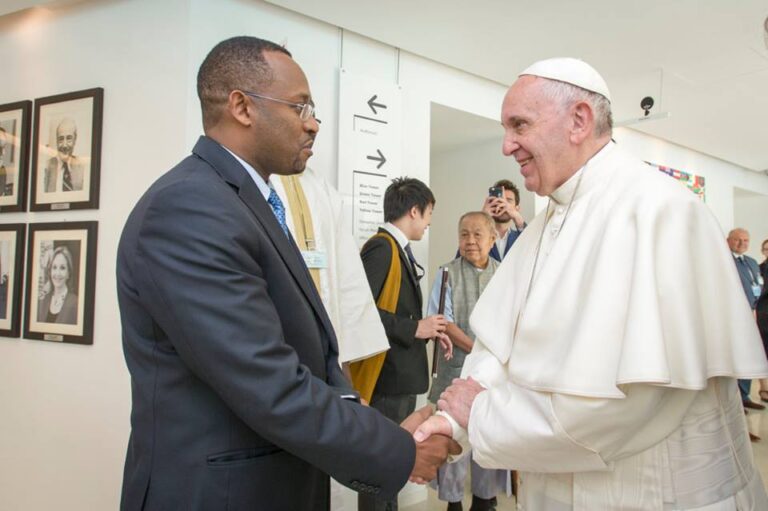
Twenty participants from Egypt, Israel, Japan, Jordan, Lebanon, the Palestinian Occupied Territory, the United States and Sweden met in two groups and provided reports to the GNRC Secretariat on the results of their discussions at the Second Forum of the GNRC from May 17 to 19, 2004. The two reports are summarized below.
In one of the groups, participants from Jordan, Lebanon, and the Palestinian Occupied Territories overviewed the challenges and the threats that face the Arab World as a result of factors such as the Israeli occupation, lack of social justice, increasing economic gaps and the spread of poverty. The participants expressed their grave concern that theses problems and barriers seriously threaten children’s rights and their well being.
- The participants, after discussions and exchanges of opinion conclude that, in order to overcome the dangers facing the area, there should be access to basic and quality education for all children regardless of sex or ethnicity. They believe that:
-Education is a basic right for children and an empowering tool for their development and for poverty eradication
-Education should include ethical and spiritual values which guarantee social progress and justice
-Educational institutions and programs should play a major role in the promotion of the Convention on the Rights of the Child (CRC)
-Education should translate ethical values into programs of solidarity, ethical deeds and human bonds.
- The participants welcome the establishment of the Interfaith Council on Ethics Education for Children and consider this initiative an important step toward the promotion of children’s rights all over the world.
- The participants agree to accelerate efforts of networking and cooperation among NGOs, CBOs, religious organizations and leaders working to promote the well being of children.
- The participants strongly emphasize the importance of accelerating activities and campaigns to guarantee the protection of children under military occupation in the Palestinian Occupied Territory and Iraq.
- The participants agree on working together to promote training programs on children rights.
- The participants stress the importance of producing educational and interesting materials and books relevant to the teaching of ethics and the CRC.
- The participants agree to conduct seminars and workshops on non-violence and conflict resolution education on all levels (NGOs, schools, universities, CBOs and parents).
- The participants, realizing the great importance of children and youth participation in their programs, pledge to provide appropriate space and platforms for children’s active participation in social transformation.
- The participants expressed their gratitude and appreciation to the Arigatou Foundation and the GNRC Secretariat in all their efforts and commitment to the cause of children’s rights and social justice.
In the other group, participants from Egypt, Israel, Japan, the Palestinian Occupied Territory, the United States and Sweden noted that, reflecting the troubled situation in the Middle East, there were divergent points of view among participants, but reported that their discussions had contributed to a better understanding of these differences. The balance of the sessions was dominated by a discussion of the conditions under which many children live in Israel and in the Palestinian Occupied Territory, which are characterized by occupation, threat of violence, instability, poverty and lack of opportunities.
* The participants indicated that it was difficult to divorce politics and religion from the discussion of issues surrounding education and ethics.
- The participants were of the view that a safe and stable school is critical to providing an environment in which children can flourish.
- The participants shared the view that ethics education has to start with an appreciation of the humanity of others, but that this is difficult to achieve when people live in a state of occupation and hostility.
- Great concern for the rights and protection of Iraqi children was expressed.
- Several recommendations came from participants in the sessions, including:
-Examine the steps taken by various countries to ensure that educational curricula respect diverse religions.
-GNRC support of children’s clubs and programs in disadvantaged areas through which children can be provided a safe environment to enjoy activities such as music, sports, recreation and positive social interaction.
-GNRC support for parental training in matters that will improve the quality of their children’s lives regardless of social or economic position.
-GNRC sponsorship of a meeting of teenagers of all faiths from throughout the Middle East in a neutral country at which the participants can discuss matters of ethics and future dreams and aspirations.
-GNRC support for the appointment of ombudsmen for children in all countries.
-GNRC call for leaders in the Middle East to guarantee children the right to life, freedom and education.
-Encourage opportunities for children of different cultures to meet together to build mutual understanding and overcome differences.
Back